
Introduction:
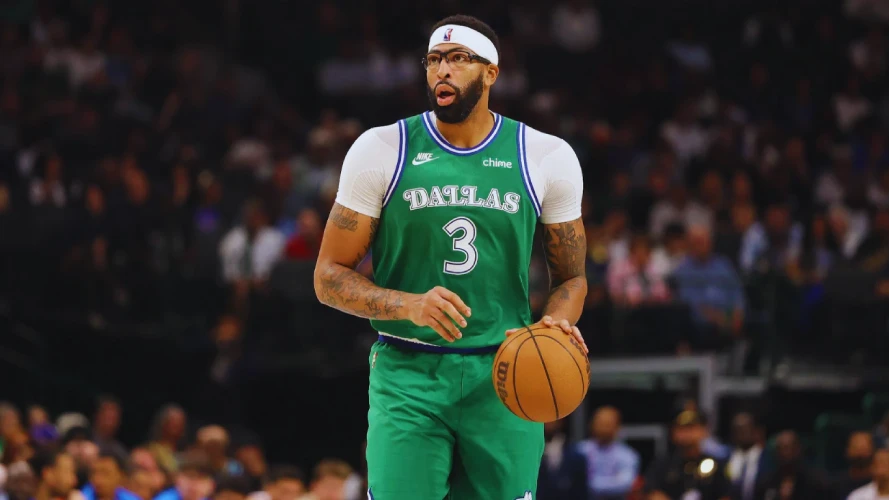
Whispers have a way of gaining momentum in the NBA until they feel inevitable. The latest rumble centers on Anthony Davis and the Chicago Bulls. According to a report from ESPN’s Jamal Collier, internal conversations have taken place within the Bulls organization about pursuing Davis, now a member of the Dallas Mavericks. For a franchise still searching for a defensive identity and interior presence, the idea of bringing Davis home to the city where he grew up has an emotional pull as powerful as its roster implications. But beyond hometown headlines lies a complex trade calculus: fit, assets, and the willingness to part with young talent. This story is as much about basketball strategy as it is about legacy, longing, and the lengths a team will go to solve a glaring need.
Why Chicago Would Consider Anthony Davis:
The Bulls’ interest in Davis is rooted in a tangible problem. Chicago has frequently shown vulnerabilities at the rim, and opponents have punished the interior with shots and second-chance opportunities. Anthony Davis is the archetypal remedy for that kind of deficiency. Even as he settles into his first full season in Dallas following the February 2025 blockbuster that sent him there, Davis remains a premier rim protector and rebounder. His presence inside would not only change opposing offenses’ approach but also free perimeter defenders to play more aggressively, knowing there is a dependable anchor behind them. More than a statistical infusion, Davis represents an identity shift one that signals Chicago wants to stop bleeding points inside and start forcing opponents into tougher, lower-percentage shots.
The Numbers Tell a Story:
Numbers rarely capture the full emotional weight of a potential trade, but they give us a clear barometer of what Davis offers. Through seven games in the 2025–26 season, Davis is averaging 21.1 points, 9.9 rebounds, and 2.9 assists while blocking 1.57 shots per game and shooting an efficient 53.7 percent from the field. Those are elite interior numbers, particularly his rebounding and efficiency. On December 1, he turned in a statement performance—32 points and 13 rebounds leading the Mavericks past the Denver Nuggets. That kind of night is a reminder of the upside Davis brings: when healthy and confident, he can dominate both ends of the floor.
Durability and availability are still questions. Davis has battled injuries throughout his career, and any long-term plan involving him requires realistic contingency planning. Yet when he’s present, he moves the needle in ways that are easy to quantify and hard to replace. For Chicago, facing opposing bigs who feast inside, the straightforward logic is that Davis would be a game-changer.
The Human Angle: Homecoming Hints and Emotional Pull:
Beyond analytics and roster fits, there is a compelling human subplot. Anthony Davis is from Chicago. The mere possibility of bringing a hometown star back to the city that raised him adds emotional texture to the rumor. For fans, the idea taps into dreams of narrative symmetry local kid returns to save franchise. For players and staff, it could boost morale and inject instant credibility. Yet emotion can mislead in major transactions. While a homecoming carries romance, NBA trades live in the realm of opportunity cost. Chicago would need to balance desire with prudence.
The Big Hurdle: Chicago’s Reluctance to Trade Its Young Core:
Where the rumor collides with reality is in the Bulls’ reported unwillingness to include their young core Josh Giddey, Matas Buzelis, and Coby White in any potential deal. That resolute stance speaks volumes about Chicago’s long-term blueprint. Management appears determined to protect the pipeline of youth and potential that could carry the franchise forward. The problem is that Anthony Davis is not a low-cost acquisition. Even in the modern NBA, a player of his caliber commands significant return value, often including young, controllable assets. The Mavericks, having acquired Davis with a package centered around Luka Dončić earlier in 2025, would have leverage and understandably would ask for substantial pieces in return.
If the Bulls refuse to part with Giddey or Buzelis, it could hamstring their ability to offer a compelling, fair package. That impasse makes this rumor more tantalizing than likely: Chicago can dream of a defensive anchor without paying the full price, but the Mavericks are not in the business of underselling elite talent.
Roster Fit and Tactical Implications:
Imagining Davis in a Bulls uniform raises interesting tactical questions. Defensively, his rim protection would be immediate and measurable. Opponents would have to account for his shot-blocking and ability to deter drives, which could lead to fewer high-percentage attempts in the paint. Offensively, Davis’s skill set adds pick-and-roll finisher capabilities and some face-up scoring that could complement Chicago’s perimeter players. There are spacing questions to consider; Davis’s ability to stretch the floor has been inconsistent, so the Bulls would need to tailor lineups that maximize his interior strengths while surrounding him with shooters and rim runners.
Fundamentally, a move for Davis signals a win-now mentality. It would indicate Chicago prioritizes immediate defensive upgrades over a prolonged developmental timeline, which is a strategic choice with both upside and risk.
What the Mavericks Might Want:
From Dallas’s perspective, holding Davis gives them a proven star who can accelerate a championship window, particularly alongside Luka Dončić. If the Mavericks entertain offers, they would likely insist on veterans and youthful talent or draft capital assets that help sustain their competitive window. A player like Josh Giddey, given his upside and age, would be exactly the kind of asset that teams trading away a star demand. Dallas would be looking to extract maximum value, not only to replace Davis’s production but to secure a strong future foundation.
The Likely Outcome:
Rumors like this tend to bubble and then recede, but they also reveal priorities. The Bulls’ internal discussions show that management is actively seeking answers to a defensive problem. Whether that answer is Anthony Davis or another avenue a trade for a less costly rim protector, a tactical coaching adjustment, or even internal development the conversation is valuable. Given the reported unwillingness to include core young assets, a blockbuster for Davis seems unlikely in the near term unless Chicago changes course or Dallas lowers its price.
Conclusion:
NBA rumors often mix hope, strategy, and spectacle, and the Bulls-Davis chatter is a perfect example. On paper, Anthony Davis offers Chicago the defensive anchor it craves, backed by efficient scoring and elite rebounding. Emotionally, the homecoming angle makes the idea irresistible for fans. Practically, however, the cost of acquiring Davis creates a high bar one that the Bulls appear reluctant to meet if it involves sacrificing their promising young core. For now, the story says as much about Chicago’s priorities as it does about Dallas’s roster. The conversation will continue, and as the season unfolds and Davis’s role in Dallas becomes clearer, the possibility will either grow more tangible or fade into another “what if” in NBA rumor lore. Until then, Bulls fans can dream, deliberate, and debate what it would mean to bring one of the league’s elite interior defenders back to his hometown.