
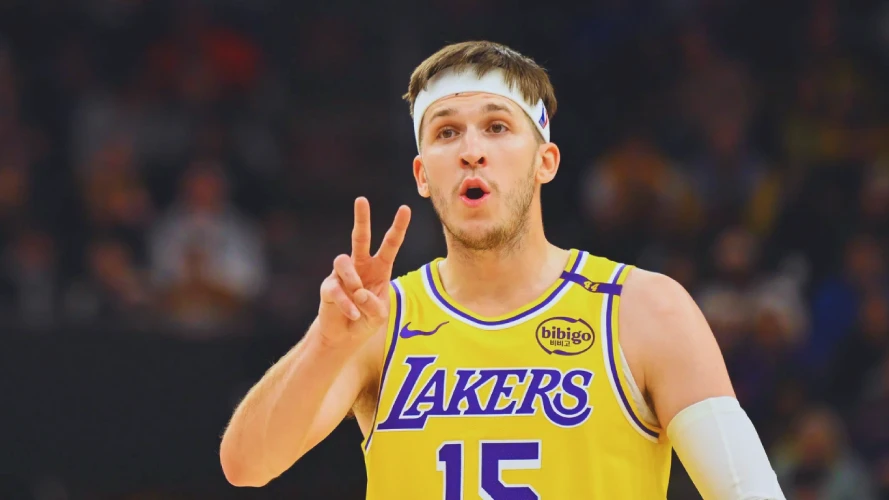
When an NBA player turns down a hefty contract offer, the headlines often jump to drama and discontent. But Austin Reaves’ recent decision to decline a four-year, $89.2 million extension from the Los Angeles Lakers is a nuanced, strategic move that deserves a closer look. Far from a sign of unhappiness with the franchise, Reaves’ choice is rooted in financial prudence, timing, and belief in his own upward trajectory as one of the league’s most reliable two-way guards. As Reaves heads toward potential unrestricted free agency in the summer of 2026, the stakes are high: the decision could pay off with a far larger payday, reshape the Lakers’ roster calculus, and define Reaves’ legacy in ways that go beyond dollars and cents.
A calculated risk grounded in contract mechanics Understanding Reaves’ reasoning requires a quick primer on the mechanics behind NBA contracts and the Collective Bargaining Agreement. Reaves is currently under a four-year, $54 million deal signed in July 2023, with a $14.9 million player option for the 2026-27 season. The Lakers later offered him an $89.2 million extension, which represented the most they could legally propose to a player of his standing under the CBA. On the surface, turning down nearly $90 million seems counterintuitive. In reality, Reaves appears to be playing the long game. By declining the extension and then forgoing his player option, he can hit unrestricted free agency in 2026 at a moment when his market value may be considerably higher. Given the way salary trends have ballooned in recent years, a starting salary north of $40 million per season on a new deal is a realistic possibility if his performance trajectory continues upward.
Performance that justifies confidence Reaves’ gamble is not made in a vacuum. He enters this decision off the back of ascending production that validates his belief in a larger future contract. After a breakout 2024-25 campaign in which he averaged 20.2 points, 4.5 rebounds, and 5.8 assists per game, Reaves has elevated his game even further in the 2025-26 season. Early-season numbers through late November 2025 show him averaging 28.5 points, 5.9 rebounds, and 6.7 assists per night, elite production that would command serious interest in any summer free-agency market. Those statistics tell a story of a player who has expanded his offensive repertoire, improved efficiency in key moments, and demonstrated leadership on and off the court. For Reaves, each scoring outburst and clutch sequence becomes an argument to prospective suitors that he is worth investing in long term.
Loyalty and reality: a delicate balance One of the most compelling aspects of this situation is the way Reaves has balanced his professional ambitions with public loyalty to the Lakers. He has repeatedly said he wants to remain in Los Angeles, and the front office reportedly views him as part of the core that could help the franchise contend. Yet the NBA is a business, and teams must manage cap space, luxury tax concerns, and championship windows. If Reaves commands a $40 million plus annual contract on the open market, the Lakers may be forced into uncomfortable roster decisions. That could include making tough choices to keep him or, alternatively, exploring trades that deliver value in return while protecting their long-term flexibility. For fans, the tension between sentimental affinity and fiscal reality is uncomfortable but familiar.
How the market could respond Free agency is as much about timing as it is about talent. With large contracts increasingly common, the market for a high-performing, two-way guard like Reaves would likely be competitive. Teams seeking backcourt scoring, playmaking depth, and dependable perimeter defense could view him as a transformative addition. Moreover, Reaves’ demonstrated chemistry with star teammates and his ability to thrive in high-pressure situations enhance his appeal. That said, teams will weigh potential acquisition costs, both financial and strategic. An offer exceeding $40 million annually would require a clear plan for roster construction, and not every franchise will be willing or able to commit that level of resources.
Implications for the Lakers’ roster strategy From the Lakers’ perspective, Reaves’ decision forces a reassessment of priorities and potential contingencies. The franchise must reconcile a desire to retain a beloved and productive player with the constraints of the cap and championship ambitions. If keeping Reaves proves too costly, the front office could pursue trade scenarios that yield younger assets, draft picks, or complementary players who fit a new financial blueprint. Alternatively, Los Angeles could attempt to match market offers, restructure internal salaries, or adjust their roster around Reaves to minimize tax burdens. Whatever path they choose, the team’s approach will reveal how they value role continuity, chemistry, and long-term fiscal sustainability in the LeBron era.
Personal stakes and the human element At the heart of these negotiations is a player whose professional future and personal livelihood hang in the balance. Declining nearly $90 million is not a cavalier act; it is a bet on one’s abilities and a willingness to shoulder risk for potential reward. For Reaves, the choice is also about legacy about maximizing the window in which he can secure financial security for his family and cement his place in the league. Meanwhile, the possibility of being traded or reshaped into a different team’s identity is a reminder of how players must remain adaptable emotionally and professionally. The psychological toll of uncertainty is often overlooked but real, making the support of teammates, coaches, and the organization crucial.
A crossroads that could define a career Austin Reaves’ decision to decline the Lakers’ four-year, $89.2 million extension is more than a contract story. It is a calculated, emotionally textured gamble that speaks to the modern player’s agency within the NBA ecosystem. If his recent streak of elite play continues, he could enter the 2026 free-agent market among the most sought-after guards, potentially earning a contract that reshapes his career trajectory. For the Lakers, the choice becomes a test of values and priorities. Do they anchor their future around a rising scorer, even at a steep cost, or do they adapt and seek alternatives?
Whatever happens next, this moment crystallizes the complex interplay between loyalty, economics, and performance in professional sports. Reaves has made his move. The coming months will determine whether it becomes a masterstroke or a moment of tough lessons. Either way, the narrative will offer plenty of drama, strategy, and heart for Lakers fans and NBA observers alike.