
The Night That Echoed Through the League
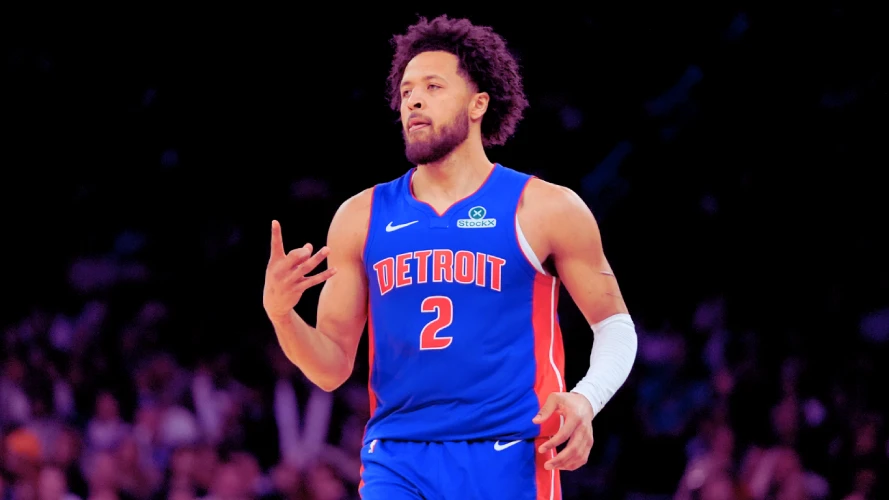
On November 10, 2025, Detroit faced Washington in a tense overtime battle. Cade Cunningham shouldered the Pistons’ hopes with a performance that was both captivating and divisive. He took 45 shots, made 14, scored 46 points, and missed 31 times. Those 31 misses became a story of their own.
In doing so, Cunningham broke the record for the most missed field goals since the NBA and ABA merged in 1976. Even Kobe Bryant’s 30-miss night in 2002 could not match it. Yet statistics alone cannot capture what that game meant. It was not a collapse. It was a testament to endurance.
Every possession told a story of a player refusing to give up. Each miss was met with another attempt, another leap of faith. It was messy, beautiful basketball.
Chasing Ghosts of Greatness
When people saw the number, the comparisons came fast. Kobe Bryant. Wilt Chamberlain. Elgin Baylor. Joe Fulks. All of them legends who carried entire teams through willpower and volume. Kobe took 47 shots against Boston in 2002 and finished with 41 points. Wilt once attempted 62 shots in a triple-overtime game and scored 78. Joe Fulks, the original gunner, missed 42 in 1948, a record that still stands.
Cade Cunningham joined that rare lineage. The Pistons won that night, unlike many of the legends before him. It was not about perfection. It was about persistence. Detroit lived through his hand, and that mattered more than efficiency.
Context Matters in the Modern Game
Basketball today is faster, smarter, and ruled by analytics. Every shot is measured by efficiency. Yet sometimes numbers cannot capture heart. Cade Cunningham’s night was one of those moments.
He is the unquestioned leader of a rebuilding Detroit team. Every offensive set starts and ends with him. When the shots stopped falling, he did not disappear. He kept attacking, driving, creating. The weight of an entire franchise rested on him, and he carried it into overtime.
Detroit has been searching for a cornerstone since the days of Chauncey Billups and the 2004 championship run. On that November night, they found a leader who plays through struggle, who keeps believing when nothing goes right.
The Company He Keeps
The names on the list of most missed shots in a single game form a strange kind of honor roll. Joe Fulks, the first scoring machine. Wilt Chamberlain, the unstoppable force. Elgin Baylor, the artist of the midrange. Rick Barry, the fearless shooter. Kobe Bryant, the legend who turned inefficiency into myth. Russell Westbrook, the symbol of relentless energy.
And now Cade Cunningham stands among them. Not because of glory but because of courage. Every great scorer walks the thin line between hero and scapegoat. Cade took that risk and found victory on the other side.
What Thirty-One Misses Really Mean
It is easy to mock a player for missing so many shots. It is harder to understand what it means to keep taking them. Each miss demands confidence to try again. Each possession demands memory to forget the last failure.
Cade’s 31 misses are not just numbers. They are moments of faith. In the end, he finished with 46 points and a win. That balance of failure and triumph defines the spirit of competition.
The greats have all lived through this paradox. Wilt’s 37 misses were forgotten under the weight of his 53 points. Kobe’s 30 misses faded behind his 41. Cade’s 31 will be remembered the same way, not for the bricks but for the will.
The Scorer’s Burden
Modern fans love efficiency. They celebrate percentages and analytics. But basketball has never been only about numbers. It has always been about rhythm, courage, and the fight within the player.
Cade Cunningham plays with that old-school burden. His teammates look to him when the offense stalls. His coach trusts him when the game tightens. His fans see in him a reminder that sometimes leadership means taking every shot, even when it hurts.
There is a strange beauty in watching someone fail repeatedly yet refuse to stop. That is what defines a scorer’s soul.
Looking Back and Forward
Joe Fulks’ 42-miss record from 1948 will likely stand forever. The modern game no longer allows that kind of volume. But Cade Cunningham’s performance might be more impressive precisely because of that.
In a league obsessed with perfection, he dared to be imperfect. He believed in himself long enough to bring his team to victory. That takes a different kind of greatness.
As the years pass, people may forget the box score but not the story. The night when a young star missed 31 times yet lifted his team will always stand as proof that courage matters more than calculation.
Conclusion The Beauty in Imperfection
Cade Cunningham’s night against the Wizards will not be remembered for flawless execution. It will be remembered for its humanity. He missed again and again but kept believing. He turned frustration into persistence, numbers into narrative.
Basketball has always belonged to the dreamers, the ones who shoot through the noise and find light in the struggle. Cade joined them on that cold November night. His 31 misses became a symbol of resilience, of passion, of the simple truth that greatness is not defined by how often you fail but by how you respond when you do. That is how legends are born.