
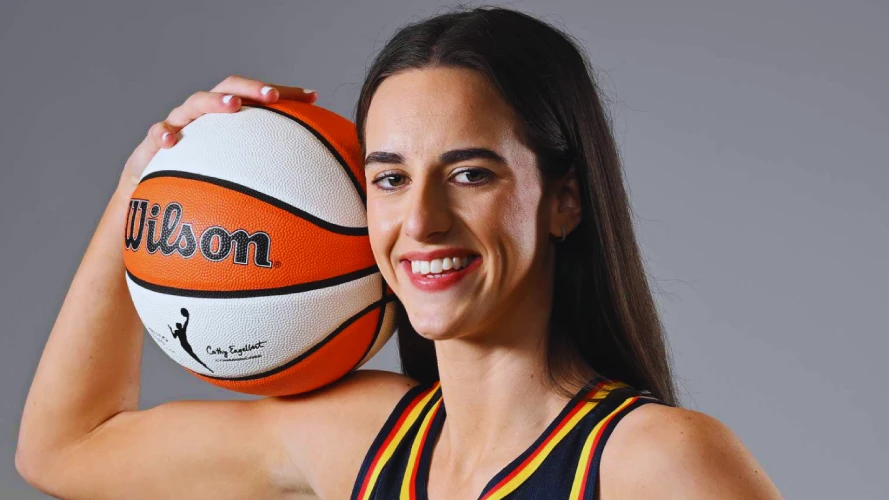
The numbers tell a story that would be laughable if it weren’t so revealing about the current state of women’s professional basketball. Caitlin Clark, the phenomenon who single-handedly transformed WNBA viewership and attendance, earned a staggering $16 million in 2025. Yet her official league salary was a modest $76,535. This stark contrast illuminates both the immense commercial value Clark brings to women’s basketball and the glaring inadequacy of the WNBA’s current compensation structure.
Recent reports from Sportico have positioned Clark as the sixth highest-paid female athlete globally, a remarkable achievement that speaks volumes about her marketability and cultural impact. However, the breakdown of her earnings reveals a troubling reality about how the league that benefits most from her presence compensates its biggest stars.
The Economics of Basketball Stardom
Clark’s journey from college basketball sensation to professional superstar has been nothing short of extraordinary. The 23-year-old guard didn’t just enter the WNBA; she revolutionized it. Her arrival coincided with record-breaking attendance figures, unprecedented merchandise sales, and television viewership numbers that shattered previous benchmarks. The economic ripple effects of her presence extended far beyond individual game tickets to encompass broadcast deals, sponsorship agreements, and corporate partnerships.
Despite generating this massive economic impact, Clark’s rookie wage was predetermined by the existing Collective Bargaining Agreement at approximately $76,535 for her first season. This figure represents the fundamental disconnect between player value creation and compensation that has plagued the WNBA since its inception. The league benefits enormously from Clark’s star power, yet the current structure prevents her from receiving compensation that reflects her actual worth to the organization.
The irony becomes even more pronounced when considering that Clark’s agent, Erin Kane, predicted this exact scenario months before the season began. Speaking to ESPN in February, Kane offered a sobering assessment of the situation facing her client and the league as a whole.
“Will Caitlin Clark ever be paid by the WNBA what she’s really worth to that league? I don’t think that’s possible,” Kane explained with remarkable candor. “She’s part of a larger player body. They all need to be paid more. She should be recognized for what she has done and what she’s brought to the league from an economic standpoint. It’s as simple as that.”
This statement encapsulates the broader challenge facing women’s professional basketball. Individual stars like Clark generate value that extends far beyond their personal compensation, yet the current system treats all players as interchangeable parts rather than recognizing the unique economic contributions of transcendent talents.
The Endorsement Economy Revolution
While the WNBA’s compensation structure remains frustratingly inadequate, Clark’s total earnings tell a different story about her market value. The vast majority of her $16 million in 2025 income came from endorsement deals rather than basketball wages, highlighting how corporate America has recognized what the league itself has been slow to acknowledge.
Major brands have lined up to associate themselves with Clark’s meteoric rise, understanding that her appeal transcends traditional basketball demographics. These endorsement partnerships reflect a sophisticated understanding of her cultural impact and commercial potential that stands in stark contrast to the league’s rigid salary structure.
The endorsement boom surrounding Clark represents a broader transformation in women’s sports marketing. Corporate sponsors are increasingly recognizing that female athletes offer unique opportunities to connect with diverse audiences and drive authentic engagement. Clark’s ability to command premium endorsement deals demonstrates that the market values her contribution far more generously than her actual employer does.
This dynamic creates an interesting paradox for the WNBA. The league benefits enormously from the increased attention and revenue that Clark generates, yet the current compensation structure ensures that the financial rewards flow primarily to team owners and league executives rather than the athletes who create the value.
Elite Female Athletes Leading the Charge
Clark’s position among the highest-paid female athletes globally provides important context for understanding the evolving landscape of women’s sports compensation. Tennis star Coco Gauff topped the list with $31 million in earnings, with $23 million coming from endorsements alone. Fellow tennis player Aryna Sabalenka ranked second with $30 million, though her competition earnings of $15 million represented the highest prize money earned by any female athlete in 2025.
The tennis comparison is particularly illuminating because it demonstrates how individual sports allow athletes to capture more direct value from their performance and marketability. Tennis players like Gauff and Sabalenka can command appearance fees, prize money, and endorsement deals that more closely reflect their actual market value. Team sports like basketball, constrained by collective bargaining agreements and salary caps, create artificial limitations on compensation that bear little relationship to individual player value.
Polish tennis star Iga Swiatek earned $23.1 million primarily through tournament winnings, while freestyle skier Eileen Gu made $23 million with most income derived from endorsements. Gymnastics legend Simone Biles and tennis icon Venus Williams also demonstrated how endorsement deals can dwarf traditional athletic compensation, particularly for athletes who transcend their specific sports to become cultural figures.
These examples illustrate the potential earning capacity of elite female athletes when market forces are allowed to operate without artificial constraints. Clark’s ability to rank among these athletes despite being constrained by WNBA salary limitations speaks to her exceptional marketability and cultural impact.
The Broader Implications for Women’s Basketball
The Clark compensation story reflects broader tensions currently playing out in WNBA labor negotiations. The Women’s National Basketball Players Association opted out of the current Collective Bargaining Agreement last October, seeking better salaries and higher revenue sharing as part of a new business model. These negotiations, which continue through the end of the 2025 season, represent a crucial moment for the league’s future.
The emergence of rival leagues offering more competitive salaries has added urgency to these discussions. Players increasingly have alternatives to the WNBA, creating pressure for the league to modernize its compensation structure or risk losing top talent. Clark’s endorsement success demonstrates that the market recognizes the value of elite women’s basketball players even when the league’s official salary structure does not.
The current negotiation environment creates particular challenges for players like Clark who have proven their ability to generate significant revenue for the league. Their individual impact on attendance, merchandise sales, and television ratings provides compelling evidence for compensation models that recognize exceptional value creation rather than treating all players identically.
Clark’s agent’s prediction that she will never be adequately compensated by the WNBA reflects the structural limitations of the current system. Even substantial salary increases contemplated in current negotiations would pale in comparison to the economic value that transcendent stars like Clark bring to the league.
The Indiana Fever Season and Beyond
Clark’s rookie season with the Indiana Fever provided concrete evidence of her transformative impact on the league. The team finished third in the Eastern Conference and sixth overall, a respectable showing that reflected significant improvement from previous seasons. However, their playoff run ended in disappointment with a semi-final loss to the Las Vegas Aces in October.
The on-court performance, while solid, was overshadowed by Clark’s broader impact on the league’s commercial success. Home games featuring Clark consistently sold out, road games saw dramatic attendance increases, and television ratings reached levels not seen since the league’s early years. Merchandise sales spiked throughout the season, with Clark-branded items becoming some of the fastest-selling products in WNBA history.
This commercial success created additional pressure on league executives to address compensation disparities that allow team owners and league officials to capture the majority of revenue increases while players receive minimal benefit. Clark’s situation became a symbol of broader inequities within the current system.
The playoff disappointment also highlighted the team-building challenges facing franchises operating under current salary constraints. The Fever’s inability to surround Clark with complementary talent partly reflected limitations imposed by salary caps that prevent teams from investing adequately in supporting players for their biggest stars.
Market Recognition vs League Compensation
The contrast between Clark’s endorsement earning power and her official league salary illuminates fundamental questions about value creation and compensation in professional sports. Corporate sponsors clearly believe that associating with Clark provides significant return on investment, as evidenced by their willingness to pay premium rates for partnership opportunities.
This market recognition stands in stark contrast to the WNBA’s compensation structure, which treats Clark similarly to players who generate far less commercial interest and economic value. The disconnect suggests that current league policies fail to account for the diverse value that different players bring to the organization.
The endorsement market operates on principles of supply and demand, allowing athletes who generate exceptional commercial interest to command compensation that reflects their actual market value. League salaries, constrained by collective bargaining agreements and artificial caps, create distortions that prevent efficient price discovery for player services.
Clark’s ability to command significant endorsement deals while receiving minimal league compensation highlights the potential for alternative compensation models that better align player pay with value creation. Revenue sharing arrangements, performance bonuses, and individual marketing rights could all play roles in creating more equitable distribution of the economic benefits generated by exceptional players.
The Future of Women’s Basketball Economics
Clark’s financial success story provides a roadmap for how women’s basketball could evolve to better compensate its most valuable players. The endorsement market has already demonstrated willingness to pay premium rates for association with transcendent female athletes. The challenge lies in translating that market recognition into league policies that allow players to capture appropriate shares of the value they create.
Current WNBA negotiations represent an opportunity to address these structural limitations through creative compensation models that recognize individual player contributions while maintaining team salary management tools. Revenue sharing arrangements could allow exceptional players like Clark to benefit directly from their impact on league-wide attendance, television ratings, and merchandise sales.
The emergence of competing leagues offering higher salaries also creates market pressure for the WNBA to modernize its approach to player compensation. The league’s long-term success depends on its ability to retain and attract top talent in an increasingly competitive environment for elite female basketball players.
Clark’s endorsement success demonstrates that corporate America recognizes the commercial potential of women’s basketball when marketing authentic stars who can connect with diverse audiences. The WNBA’s challenge lies in creating internal compensation structures that reflect this external market recognition.
Conclusion
Caitlin Clark’s remarkable achievement of ranking among the world’s highest-paid female athletes while earning less than $80,000 from the WNBA tells a complex story about value, recognition, and systemic change in women’s professional sports. Her $16 million in total earnings, driven primarily by endorsement deals, demonstrates the massive commercial potential that exists when exceptional talent meets authentic market demand.
The stark contrast between her endorsement earnings and league salary exposes the fundamental inadequacy of current WNBA compensation structures. While corporate sponsors readily pay premium rates to associate with Clark’s cultural impact and commercial appeal, the league that benefits most directly from her presence remains constrained by outdated policies that treat all players as interchangeable commodities.
Clark’s agent’s sobering assessment that she will never be adequately compensated by the WNBA reflects broader structural limitations that extend far beyond any individual player’s situation. The current system captures the vast majority of economic benefits generated by transcendent stars for team owners and league executives while providing minimal compensation to the athletes who actually create the value.
As WNBA labor negotiations continue, Clark’s financial success provides compelling evidence for compensation models that better align player pay with individual value creation. The endorsement market has already demonstrated its willingness to reward exceptional female athletes appropriately. The challenge now lies in translating that external recognition into internal league policies that create sustainable career opportunities for the players who drive women’s basketball forward.
The evolution of women’s sports economics depends on recognizing and rewarding the unique contributions of players like Clark who transcend their individual sports to become cultural phenomena. Her story represents both the immense potential of women’s professional basketball and the urgent need for systemic changes that ensure the athletes who create value receive fair compensation for their contributions.
The next chapter of this story will be written in boardrooms and negotiation sessions where the future of women’s basketball compensation will be determined. Clark’s remarkable financial success, built primarily outside the league’s official structure, provides a powerful argument for embracing change that recognizes market realities and rewards exceptional performance appropriately.