
A Father’s Dream Court: Jayson Tatum’s Ambitious Vision to Share the NBA Stage With His Son
In the world of professional sports, few moments capture the imagination quite like witnessing a parent and child compete together at the highest level. When LeBron James and his son Bronny made NBA history by becoming the first father-son duo to share the court, they didn’t just achieve a personal milestone; they opened a door of possibility that has inspired other NBA stars to dream bigger about their own family legacies.
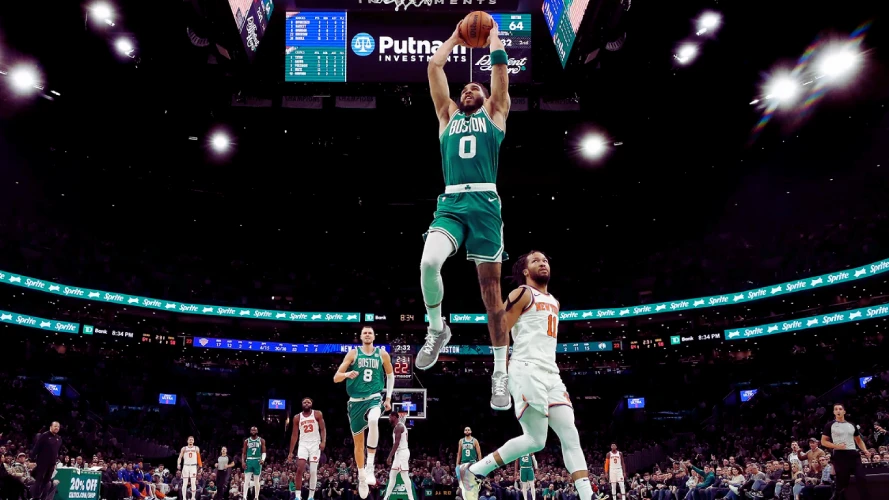
Among those captivated by this historic achievement is Boston Celtics superstar Jayson Tatum, who recently revealed his own ambitious vision of one day playing alongside his eight-year-old son, Deuce. This dream, while still years away from potential reality, offers a fascinating glimpse into how today’s NBA stars are thinking about longevity, family, and the evolving nature of professional basketball careers.
The Blueprint Set by the James Family
The precedent established by LeBron and Bronny James cannot be understated in its significance to the basketball world. When the Los Angeles Lakers drafted Bronny in 2024, they weren’t just selecting a promising young player; they were facilitating one of the most emotionally resonant storylines in sports history. The sight of 40-year-old LeBron sharing the court with his 21-year-old son represented the culmination of decades of excellence, longevity, and unwavering dedication to the game.
This achievement demonstrated that the modern NBA allows for career spans that were previously unimaginable. LeBron’s ability to maintain elite-level performance well into his fourth decade has redefined what’s possible for professional athletes, creating a template that younger stars like Tatum are now studying with intense interest.
The James family’s success story has become more than just a basketball achievement; it represents the ultimate intersection of professional excellence and personal fulfillment. For players like Tatum, who are still in the prime of their careers, it provides both inspiration and a tangible goal to work toward.
Tatum’s Mathematical Optimism
During a recent appearance on The Morris Code, Tatum laid out his thinking with the kind of mathematical precision that reflects both his basketball intelligence and his genuine emotional investment in the idea. At 27 years old, with Deuce having just celebrated his eighth birthday, Tatum sees a clear pathway to making this dream a reality.
“He turns 8, I’m 27, it’s like, ‘Man, can I play 10 more years?’ I can easily do that. I mean, if it were to work out, that would be cool,” Tatum explained, his words carrying both confidence and the cautious hope of a father who understands that athletic careers are never guaranteed.
The timeline Tatum envisions is both ambitious and realistic. Playing for another decade would put him at 37 when Deuce turns 18, assuming the young Tatum follows a traditional path through high school and potentially college basketball. While this age might have seemed impossible for previous generations of NBA players, the modern game’s emphasis on sports science, nutrition, and load management has extended careers significantly.
Tatum’s confidence in his ability to maintain elite performance for another decade reflects not just personal ambition but also the changing landscape of professional basketball. Players like LeBron, Chris Paul, and others have proven that excellence can be sustained well beyond traditional retirement ages with proper care and dedication.
The Young Tatum’s Basketball Journey
The foundation for this future dream is already being laid through Deuce’s early exposure to basketball. Jayson Christopher Tatum Jr., whose nickname “Deuce” has become synonymous with Celtics culture, represents the next generation of basketball talent growing up with unprecedented access to elite coaching, facilities, and basketball knowledge.
Tatum recently revealed that Deuce has begun his organized basketball journey, marking a significant milestone in the young player’s development. “He just started playing basketball on the organized team,” Tatum shared with People magazine. “So he’s really starting to fall in love with the game. It’s exciting to see that.”
This early involvement in organized basketball provides Deuce with advantages that even his father didn’t have at the same age. Growing up as the son of an NBA champion means access to elite coaching, training facilities, and constant exposure to professional-level basketball. The young Tatum is essentially receiving a basketball education that most players never experience.
Regular appearances courtside at Celtics games have made Deuce a familiar face to NBA fans, and his presence has become part of the broader Tatum brand. These experiences provide him with an understanding of professional basketball that goes beyond just playing the game; he’s learning about the culture, the pressure, and the dedication required to succeed at the highest level.
The Challenges and Realities
While Tatum’s optimism is infectious, the path to achieving this dream involves numerous variables that remain beyond anyone’s control. Professional sports careers are notoriously unpredictable, with injuries, performance decline, and changing team dynamics all capable of altering even the best-laid plans.
The physical demands of playing in the NBA for another decade cannot be understated. Even with modern sports science and medical advances, maintaining elite performance into the late thirties requires exceptional genetics, unwavering dedication to conditioning, and a certain amount of luck regarding injuries.
Additionally, Deuce’s own basketball development will ultimately determine whether this dream becomes feasible. While he has obvious advantages in terms of access and coaching, basketball success at the professional level requires a rare combination of talent, work ethic, and mental toughness that cannot be guaranteed regardless of pedigree.
The NBA draft process and team building strategies also add complexity to any father-son scenario. Unless Tatum remains with the Celtics throughout his entire career and Boston happens to draft Deuce, achieving this goal would require careful planning and potentially difficult decisions about team loyalty versus family aspirations.
The Broader Family Context
Tatum’s vision for playing alongside Deuce takes place within the context of a modern family structure that reflects the evolving nature of professional athletes’ personal lives. Deuce was born in December 2017 to Tatum and his high school girlfriend, Toriah Lachell. Since then, Tatum has expanded his family, welcoming a second child with British singer Ella Mai.
This family dynamic adds layers of complexity and motivation to Tatum’s basketball longevity goals. Balancing the demands of an extended NBA career with the responsibilities of fatherhood requires careful consideration of priorities and the ability to maintain peak performance while being present for his children’s development.
The relationship between Tatum and Deuce has become a central part of the Celtics star’s public persona. Their bond is evident in interviews, social media posts, and the young boy’s regular presence at games. This visible father-son connection has resonated with fans and added a human element to Tatum’s superstar image.
Learning from LeBron’s Longevity Model
Tatum’s confidence in his ability to extend his career draws heavily from observing LeBron James’ approach to longevity. The Lakers star has become a case study in how modern athletes can maintain elite performance well beyond traditional expectations through meticulous attention to physical conditioning, recovery, and basketball IQ development.
LeBron’s investment in his body reportedly exceeds one million dollars annually, covering everything from personal chefs and trainers to cutting-edge recovery technology and medical care. This comprehensive approach to physical maintenance has allowed him to play at an MVP level well into his fourth decade.
For Tatum, who is already recognized as one of the NBA’s premier players, adopting similar strategies could indeed make a ten-year extension realistic. His current level of play, combined with his age and physical condition, provides a strong foundation for sustained excellence.
The mental aspects of longevity also cannot be ignored. LeBron’s ability to continue finding motivation and maintaining competitive fire after achieving virtually every possible basketball milestone demonstrates the psychological requirements for extended excellence. Tatum’s dream of playing with Deuce could provide exactly the kind of long-term motivation needed to sustain peak performance.
Championship Legacy and Future Vision
As the 2024 NBA champion and a player entering his prime years, Tatum has already established himself among the elite players in basketball. His success with the Celtics has provided him with the credibility and platform to pursue ambitious long-term goals while maintaining focus on current championship aspirations.
The dream of playing alongside Deuce represents more than just personal achievement; it would cement the Tatum family legacy in basketball history while providing the Celtics organization with a unique storyline that could span generations.
This vision also reflects the changing nature of how NBA stars think about their careers and legacies. Previous generations often focused solely on individual achievements and immediate team success. Today’s players, influenced by examples like LeBron, are increasingly thinking about multi-generational impact and family legacy.
Jayson Tatum’s dream of sharing an NBA court with his son Deuce represents the perfect intersection of athletic ambition and paternal love. While the challenges are significant and success is far from guaranteed, the precedent set by LeBron and Bronny James has proven that such dreams are no longer impossible.
The next decade will reveal whether Tatum can maintain the elite performance necessary to make this vision reality, while Deuce’s own basketball development will determine if he possesses the talent to reach the professional level. Regardless of the outcome, Tatum’s willingness to publicly embrace this goal demonstrates the kind of long-term thinking that has become characteristic of today’s NBA superstars.
In a league where careers can end suddenly and unpredictably, having a dream that extends years into the future provides both motivation and purpose that transcends individual games or seasons. For Tatum, the possibility of one day passing the ball to his son in an NBA game represents the ultimate achievement, combining professional excellence with the deepest kind of personal fulfillment.