
Introduction:
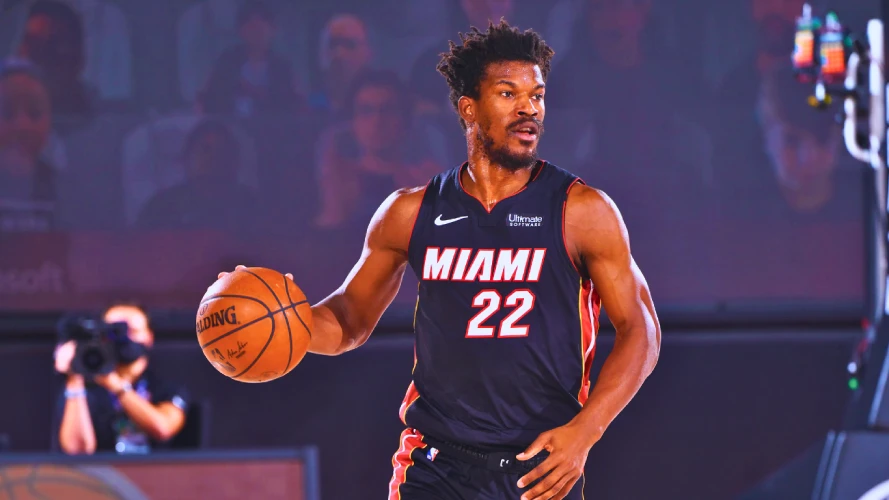
On a cool November evening, the Golden State Warriors found themselves tested in ways that reveal the depth of a team. With Stephen Curry sidelined by a quadriceps injury, the responsibility to steady the ship fell to a veteran used to big moments. Jimmy Butler III answered that call, delivering a performance that was as much about leadership as it was about stats. His 24 points, eight rebounds, and 10 assists guided the Warriors to a gritty 104-96 victory over the New Orleans Pelicans, a win that felt less like a stat line and more like a reaffirmation that this Warriors team can adapt when the script changes.
A steady hand in stormy waters:
The narrative of this game began with an ugly chapter for Golden State from beyond the arc. The Warriors, renowned for their shooting, staggered early, hitting just one of their first 19 three-point attempts. In arenas where expectations are measured by perimeter accuracy, the crowd’s impatience and the players’ frustration were almost tangible. It was in that vacuum of outside scoring that Butler became the catalyst. He attacked the paint, drew contact, and got to the line repeatedly, converting 10 of 14 free throws. Those trips to the charity stripe and his ability to finish through contact provided the consistent scoring pulse that kept the Warriors afloat.
Flagging perimeter production exposed the team to extended defensive schemes from New Orleans, but Butler’s multi-dimensional game neutralized much of the threat. He moved the ball with poise, dished timely assists, and read rotations—finishing the night with a near triple-double. More than numbers, his presence seemed to steady a roster adjusting to life without Curry’s gravity. When defenses collapsed on him, Butler found teammates. When matchups favored him, he attacked. That give-and-take defined his night and kept Golden State ahead when it mattered most.
Team dynamics and key contributors:
Basketball is a collective sport, and while Butler rightly drew the headlines, the victory was built on several complementary performances. Gary Payton II emerged as a critical two-way force for the Warriors, finishing with 19 points and 11 rebounds. His energy on both ends provided a physical backbone that helped compensate for the team’s offensive funk. Payton’s rebounding and hustle plays prevented second-chance opportunities for the Pelicans and allowed Golden State to control the tempo during crucial stretches.
The coaching staff’s adjustments also deserve recognition. With Curry out, the offensive sets shifted to prioritize attacking the rim and creating scoring through paint penetration rather than relying on perimeter shooting. These adjustments showed a willingness to adapt and emphasized the importance of veterans who can run alternate looks. The Warriors executed enough of these new motifs to maintain leads, absorb Pelicans runs, and ultimately close the game with poise.
Context and significance within the season:
This win feels larger than a single entry in the standings. It is a litmus test for how Golden State might navigate inevitable absences and slumps over a long season. Teams lose star players to injury; the difference between a playoff team and a pretender is often how well it copes in those stretches. Butler’s performance signaled that the Warriors possess a roster resilience that can withstand Curry’s absence for stretches without ceding identity.
For Butler personally, the night reinforced his reputation as a consummate professional capable of lifting teammates in pressure situations. His game-high plus-minus of plus-22 was a statistical reflection of sustained influence across 37 minutes. Beyond the box score, his calm under pressure and ability to make the right play repeatedly created a psychological edge that compounds into confidence for the entire roster.
How the Pelicans pushed and where they fell short:
The New Orleans Pelicans offered a credible and competitive opponent. They applied defensive pressure that exploited Golden State’s early three-point struggles and forced several uncomfortable possessions. Yet, their inability to consistently halt Butler’s drives and to keep him from getting to the free-throw line proved costly. Offensively, the Pelicans produced enough to stay in the contest, but gaps in execution during the final minutes prevented them from mounting a comeback. In tight games, the opponent who makes the cleaner decisions and converts free opportunities usually wins. Against the Warriors on this night, that team was Golden State.
Looking ahead: implications for the Warriors:
If there is a silver lining for the Warriors, it is that nights like this help build a blueprint for success when Curry is unavailable. Rely on veteran leadership, embrace physicality, attack the rim, and let complementary players like Gary Payton II shoulder extra responsibility. The coaching staff will study this win for processes that can be replicated: how minutes were allocated, how sets were simplified to prioritize high-percentage plays, and how defensive matchups were exploited.
For the roster, the lesson is clear: collective buy-in matters more than any single hot streak. Players who accept altered roles and bring energy in tough stretches become invaluable. That manufactured resilience could be the difference between staying afloat in the volatile NBA calendar and slipping into a prolonged skid.
Conclusion:
Jimmy Butler III’s 24-point, eight-rebound, 10-assist night was more than an impressive stat line. It was a performance that steadied the Golden State Warriors when their hallmark three-point game faltered and their leader Stephen Curry was forced to the sidelines. The 104-96 victory over the New Orleans Pelicans showcased veteran leadership, timely contributions from Gary Payton II, and a coaching approach willing to adapt to circumstances. As the season unfolds, this game will be remembered as a tone-setting example of resilience and a reminder that in basketball, the next player up often becomes the story.