

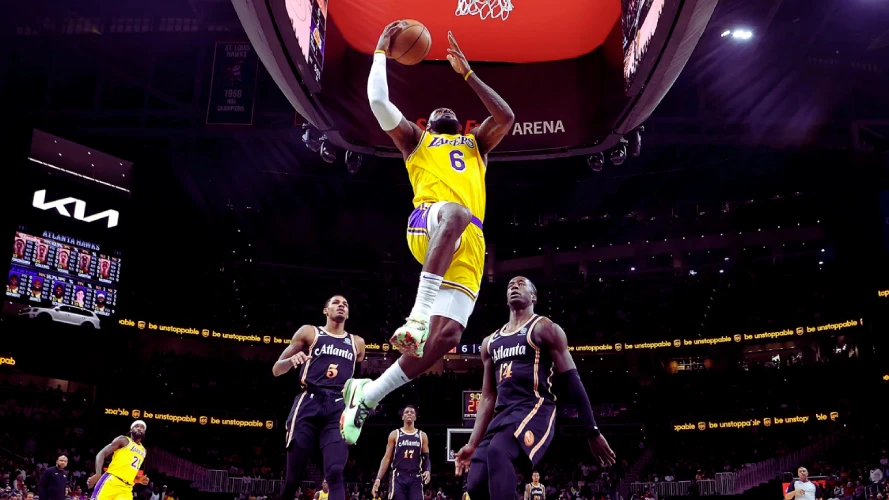
The Los Angeles Lakers have been missing the heartbeat of their team. LeBron James, the cornerstone of the franchise and one of the greatest players in NBA history, has been sidelined with a sciatica injury since late summer. Now, according to multiple reports from ESPN and other outlets, the four-time champion is targeting a mid-November return an update that breathes new life into a team still finding its rhythm without him.
For a player entering his 23rd NBA season and approaching his 41st birthday in December, the journey back from any injury requires patience, planning, and precision. But if history has shown anything, it is that LeBron’s resilience is as extraordinary as his legacy.
Understanding the Injury
Sciatica is not your typical basketball injury. It occurs when the sciatic nerve running from the lower back through the hips and down the legs becomes irritated or compressed. The result is often sharp pain, numbness, or tingling sensations that make explosive movement and quick changes of direction nearly impossible. For an athlete who relies on power, balance, and control like LeBron, such a condition can be especially limiting.
Reports indicate that the issue began subtly in late July or early August, during an offseason workout. What first appeared to be mild nerve irritation in his glute area eventually developed into full sciatica symptoms. While the Lakers initially projected a three to four week recovery period, the team has wisely chosen to extend that timeline. Given LeBron’s age and the mileage on his body, the organization is prioritizing long-term health over short-term returns.
The Lakers’ Careful Plan
The Lakers’ medical and training staff have taken an intentionally cautious approach. LeBron has been undergoing a structured rehabilitation program that includes targeted physical therapy, controlled movement work, and gradual reintegration into basketball activity.
According to team insiders, his re-evaluation took place on October 30, and while progress has been positive, both LeBron and the team are resisting any urge to rush. The plan is deliberate: first light court activity, then half-speed drills, followed by full-contact practice sessions before he is cleared for game action.
This disciplined method reflects both the Lakers’ understanding of the risks of re-aggravation and their trust in their depth to hold steady until their leader returns.
Life Without LeBron
The Lakers have felt the void of their leader’s presence on and off the court. In his absence, Luka Dončić has taken on the role of primary offensive engine, guiding the team through the early stretch of the season. His creativity and scoring ability have kept Los Angeles competitive, but the load has been heavy.
Without LeBron, the Lakers’ offense has leaned more on isolation sets and quick pick-and-rolls, with Dončić creating much of the offense himself. The team’s record in games without James last season was an even 6–6, showing flashes of potential but also clear gaps in leadership and defensive organization.
This season has echoed that pattern. The Lakers can compete, but there is a tangible difference when the King is not orchestrating the floor. His basketball IQ, court vision, and presence anchor the team in ways that statistics cannot measure.
The Impact of LeBron’s Return
When LeBron steps back on the court, the impact will ripple beyond the box score. His return will restore balance to the offense, allowing Dončić to operate more freely and off the ball. It will also re-establish defensive communication, a trait that often goes unnoticed but has defined LeBron’s teams for years.
His ability to dictate pace, control possessions, and elevate the players around him is something no training camp or roster shuffle can replicate. Even in his forties, he remains one of the most physically dominant and mentally sharp players in the game.
The Lakers have learned to adapt without him, but his presence turns a good team into a contender.
The Road Ahead
The most likely window for LeBron’s return is the Lakers’ upcoming five-game homestand beginning November 18 against the Utah Jazz. That stretch provides an ideal setting for his comeback—a controlled schedule, minimal travel, and the energy of the home crowd to fuel his rhythm.
By then, LeBron will have missed roughly the first ten games of the season. It’s a small price to pay if it means ensuring that he returns healthy and stays available for the long grind ahead.
With the Western Conference as competitive as ever, the Lakers know that their margin for error is slim. But with LeBron and Dončić on the floor together, few teams can match their combination of experience, versatility, and star power.
A Veteran’s Patience and Perspective
LeBron’s approach to this recovery has been consistent with how he has handled adversity throughout his career with patience, professionalism, and purpose. At this stage, he understands that every decision must serve the bigger picture. Playing through pain might satisfy competitive instincts, but managing health is what extends careers.
Turning 41 in December, he continues to redefine the limits of longevity in professional basketball. His ability to adapt whether by adjusting his playing style, refining his conditioning, or managing his minutes has allowed him to remain among the elite even after two decades in the league.
This injury, though frustrating, is not a setback in spirit. It is simply another challenge in a career defined by endurance.
The Bigger Picture
The Lakers’ season, for now, is about balance. They must continue to compete while maintaining the patience required for LeBron’s recovery. Luka Dončić’s expanded role could prove invaluable long-term, allowing him to grow into a more complete leader. And when LeBron returns, the chemistry forged in his absence could make the team even more dangerous.
The story of the Lakers’ 2025–26 season may ultimately be about timing the patience to heal, the poise to adapt, and the power of return.
Conclusion: The Calm Before the Comeback
As the calendar turns toward mid-November, anticipation grows. Fans can feel it, teammates can sense it, and opponents can see the warning signs. LeBron James is coming back.
His sciatica recovery has tested his body and his patience, but it has not dimmed his drive. The league has seen countless comebacks, but few carry the weight of this one. This is not just another return from injury it is a reminder of endurance, leadership, and the unrelenting pursuit of greatness.
When he finally steps onto the court again, the story will not just be about recovery. It will be about a legend who refuses to fade quietly. The Lakers have kept the fire burning in his absence, but when LeBron returns, the flames will rise again.