
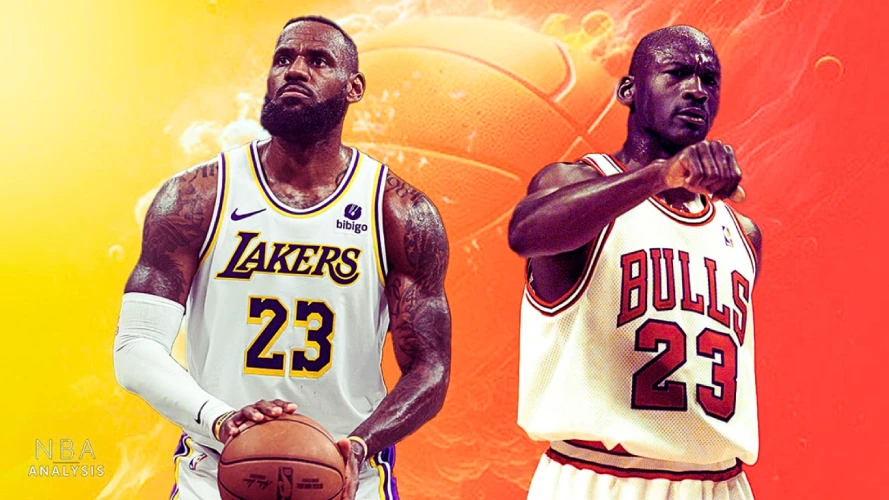
The debate over who is the greatest basketball player of all time has been alive for decades, and at the heart of that conversation stand two names that need no introduction. Michael Jordan and LeBron James. They belong to different generations, yet their careers seem connected by uncanny coincidences and remarkable parallels that make the comparison even more fascinating.
When you look closely, it’s as if history has mirrored itself, creating two athletes who not only changed basketball but redefined what greatness means.
The Numbers that Connect Two Eras
Basketball fans love statistics, but in this case, the numbers themselves feel poetic.
Michael Jordan was drafted in 1984, the same year LeBron James was born. Jordan’s arrival marked the beginning of a revolution in the NBA. His competitive fire, unmatched athleticism, and killer instinct made him a global icon. Nearly two decades later, when Jordan retired for the final time in 2003, it was the same year LeBron was drafted as the No. 1 overall pick by the Cleveland Cavaliers. The timeline feels deliberate, almost symbolic. One legend handed the game to the next.
Both players wore the number 23, a number that now transcends sports. It is not just a jersey number but a global symbol of excellence, ambition, and legacy. For Jordan, #23 became synonymous with dominance. For LeBron, it became a tribute and a challenge—to carry forward the standard Jordan set.
There’s another eerie parallel in their Finals records. Jordan won 6 championships, going a perfect 6–0 in the NBA Finals. LeBron, meanwhile, has been to 10 Finals but lost 6 of them. Some see this as a mark against LeBron. Others argue it reflects his longevity and ability to carry teams to the biggest stage again and again. Either way, the number 6 keeps haunting this debate—six wins for Jordan, six losses for LeBron.
Different Paths to Immortality
Jordan and LeBron were built differently not only in physique but also in philosophy. Jordan was the pure embodiment of obsession. Every practice, every possession, every challenge mattered to him. He ruled through fear and respect, pushing teammates beyond their limits. His leadership was sharp, often brutal, but always effective.
LeBron, by contrast, leads through connection. He thrives on elevating those around him, mentoring younger teammates, and building chemistry. Where Jordan’s fire burned inward, LeBron’s energy flows outward. He is not just a player but a strategist, a communicator, and a cultural ambassador.
Jordan’s game was defined by mid-range artistry, impossible fadeaways, and relentless defense. LeBron’s is built on versatility—he can score, rebound, pass, and defend at elite levels, all while adapting to different eras of basketball.
Cultural Icons Beyond the Court
Both men transcended the sport in ways no statistic can measure.
Jordan became a cultural phenomenon through his partnership with Nike, creating Air Jordan, the sneaker empire that still dominates fashion and sport decades later. He was the first true global basketball brand. His name became a standard for success, influencing generations of athletes and entrepreneurs.
LeBron took that model and expanded it for the digital age. He turned himself into a global enterprise, blending sports, entertainment, and activism. Through his company SpringHill Entertainment, his school I PROMISE, and his outspoken advocacy on social issues, LeBron redefined what athlete empowerment looks like.
Jordan’s legacy was about dominance. LeBron’s is about influence.
Greatness in Context
Comparing them has always been tempting, but it may also be missing the point. Jordan defined perfection in an era that celebrated individual brilliance. LeBron redefined greatness in a time that values versatility and longevity.
Jordan played 15 seasons and delivered two three-peats, an achievement unmatched in the modern NBA. LeBron is now in his 40s and still playing at an All-NBA level, something almost unimaginable in Jordan’s day.
The truth is, both men became mirrors of their generations. Jordan’s era was about supremacy. LeBron’s era is about sustainability. Each forced the sport to evolve and inspired countless players to dream bigger.
The Legacy That Will Never Fade
The coincidences are real. Drafted in 1984. Born in 1984. Retired in 2003. Drafted in 2003. Both wore #23. Both changed basketball forever.
But beyond those details lies something more profound. They represent different definitions of greatness, yet both remind us that greatness itself is timeless.
Jordan gave the game its soul. LeBron gave it its voice. And together, they ensured basketball will never stop chasing perfection.