

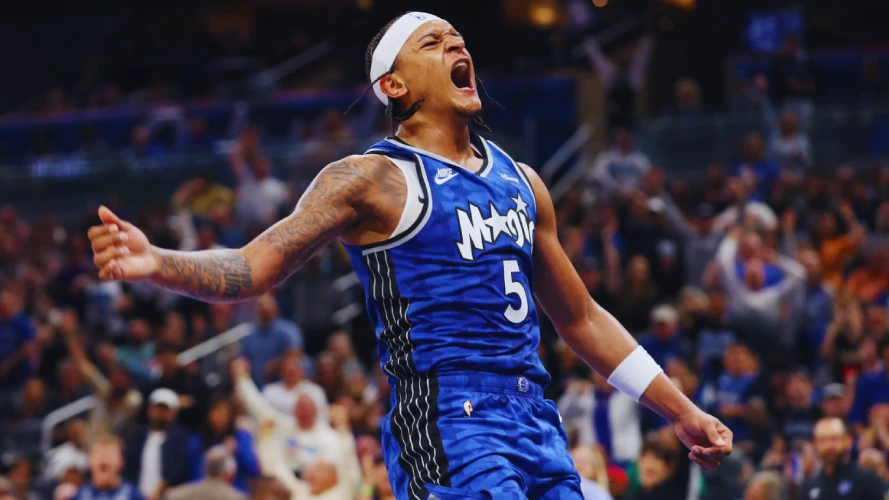
The anticipation is building at the Kia Center as Paolo Banchero edges closer to his return from a groin injury that has sidelined him for three crucial weeks. While the Orlando Magic have defied expectations with an impressive 7-3 record in his absence, the underlying numbers tell a different story about what his comeback truly means for this franchise’s championship aspirations.
The national media narrative has been predictable and shortsighted. Pundits have questioned whether the Magic might actually be better without their young superstar, pointing to improved ball movement and offensive flow during his absence. This surface-level analysis misses the fundamental truth about what makes championship teams special: the ability to maximize talent at every position while maintaining depth that can weather any storm.
Banchero’s impending return, with his status upgraded to questionable for Friday’s showdown against the Miami Heat, represents far more than just getting another scorer back on the floor. It’s about restoring the delicate balance that transforms good teams into great ones.
The Memory of Heroic Returns
Orlando Magic fans remember the electricity that filled the arena when Banchero returned from his torn oblique injury last January. The Undertaker’s theme music boomed through the speakers as he was introduced, creating a moment of pure theater that perfectly captured the significance of his comeback. His 34-point, seven-rebound performance in that game against Milwaukee, despite the loss, reminded everyone why this young man is the cornerstone of the franchise’s future.
The only regret Banchero expressed afterward was not knowing about the dramatic entrance beforehand, robbing him of the chance to fully embrace the moment. It was a glimpse into his personality and understanding of how to connect with fans and create lasting memories.
Now, as he prepares for another return after missing 10 games with a strained left groin, the circumstances are markedly different. The team has thrived in his absence, creating a fascinating dynamic that speaks to both the Magic’s improved depth and the unique challenges facing modern NBA stars.
This three-week absence pales in comparison to the two-month layoff he endured last season, but the timing and context make it equally significant for the franchise’s trajectory this year.
The Success That Masked Underlying Issues
The Magic’s 7-3 record without Banchero has been impressive by any measure, vaulting them back into playoff contention and earning a spot in the NBA Cup knockout rounds. Since November 13th, Orlando has posted a 119.0 offensive rating paired with a 110.6 defensive rating, ranking seventh in offense and fourth in defense during that span.
These numbers represent a dramatic improvement from earlier struggles and suggest that the team has found its identity both offensively and defensively. The ball movement improved, players stepped into expanded roles, and the defense maintained its elite level despite missing their most versatile forward.
However, beneath these encouraging statistics lies a more complex reality that only reveals itself through deeper analysis. The team’s success has come despite, not because of, structural imbalances that Banchero’s return will address.
The recent games against Chicago and San Antonio exposed the limitations of the current configuration. The offense began showing signs of fatigue and predictability, lacking the dynamic playmaking and shot creation that only elite talents can provide consistently. Role players, no matter how well they perform, cannot indefinitely replace the impact of genuine star power.
The Starting Lineup Mathematics
The most compelling evidence for why Banchero’s return matters lies in the stark contrast between lineup performances. The Magic’s starting five with Banchero alongside Jalen Suggs, Franz Wagner, Wendell Carter, and their newest addition has been nothing short of spectacular when healthy.
In 101 minutes together, this group posted a remarkable 122.4 offensive rating and 103.1 defensive rating, creating a net rating of plus-19.3 that currently leads all NBA lineups with at least 100 minutes of action. This level of dominance is rare in today’s NBA, where parity has made such statistical outliers increasingly uncommon.
The substitute lineup featuring Tristan da Silva in Banchero’s spot tells a dramatically different story. Despite da Silva’s admirable efforts and solid individual contributions, this group managed only a minus-10.1 net rating across 96 minutes, with concerning offensive struggles that posted just a 105.6 rating.
The first quarter struggles have been particularly telling during Banchero’s absence. The makeshift starting unit posted a devastating minus-13.5 net rating in opening periods, including a woeful 101.0 offensive rating that consistently put the team behind early in games. This created additional pressure on the bench units and made every game more difficult than necessary.
In contrast, the Banchero-led starting group posted a plus-19.9 first quarter net rating with a dominant 132.3 offensive rating. These numbers illustrate how his presence creates easier scoring opportunities for teammates while maintaining defensive integrity.
The Bench Renaissance Story
One of the most encouraging developments during Banchero’s absence has been the emergence of the bench as a legitimate strength rather than a liability. Early in the season, Orlando’s reserves ranked 26th in scoring at just 32.7 points per game, creating concerns about depth that seemed to validate critics who questioned the roster construction.
Anthony Black’s transformation into a legitimate Sixth Man of the Year candidate has been the catalyst for this improvement. Averaging 15.4 points per game while shooting a respectable 34.3 percent from three-point range, Black has provided the secondary scoring punch that many believed was missing from this roster.
His consistency has been particularly impressive, reaching double figures in all but two games during Banchero’s absence. This reliability from a second-year player has given coach Jamahl Mosley flexibility in rotations and confidence in extending bench minutes when necessary.
The bench unit as a whole has elevated its production to 38.0 points per game since November 13th, ranking 10th league-wide and representing a dramatic improvement that addresses one of the team’s most glaring early-season weaknesses.
Tristan da Silva’s steady contributions have also been crucial during this period. His shooting percentages remained consistent whether starting or coming off the bench, demonstrating the kind of role flexibility that championship teams require from their supporting cast.
The Integration Challenge Ahead
Banchero’s return presents both opportunity and challenge for a team that has found its rhythm without him. The key question becomes how quickly he can reintegrate into an offense that has developed new patterns and tendencies during his absence.
Before his injury, Banchero was already showing signs of evolution in his approach to the game. Over his final six healthy games, he averaged 23.5 points, 9.2 rebounds, and 5.3 assists while shooting an efficient 52.9 percent from the field. These numbers suggested he was finding the balance between individual dominance and team basketball that defines elite players.
The criticism of Banchero as a “ball stopper” has some merit, but it oversimplifies the complex dynamics of NBA offense. Every elite scorer must learn when to take over games and when to facilitate for teammates. This learning process is natural for young stars and should not overshadow his obvious talents.
His defensive versatility adds another dimension that the makeshift lineups simply cannot replicate. Banchero’s ability to guard multiple positions and switch seamlessly in defensive schemes provides the foundation for the elite defensive ratings the starting lineup has produced when healthy.
The Depth Equation Solution
Perhaps the most exciting aspect of Banchero’s return is how it should enhance rather than diminish the bench production that has been so encouraging. With Black established as a reliable secondary scorer and da Silva proving his worth in various roles, the Magic now have the depth to ensure at least one major contributor is always on the floor.
This staggered rotation approach has become essential in modern NBA success. Teams that can maintain offensive efficiency and defensive intensity regardless of which players are on the court gain significant advantages over opponents who experience major drop-offs with their reserves.
The Magic’s ability to maintain competitive basketball during Banchero’s absence proves they have achieved this depth. Now, adding back their best player should create a multiplicative rather than additive effect, making the entire roster more dangerous.
The rotation adjustments will require careful management from the coaching staff, but the foundation has been established during these three weeks of necessity-driven experimentation.
The Championship Window Reality
While the national media focuses on whether the Magic are better without Banchero, the more relevant question concerns their championship ceiling with and without him. Role players and system basketball can win regular season games and even playoff series, but championships typically require transcendent individual talent combined with excellent supporting casts.
Banchero represents the Magic’s best hope for that transcendent talent. His combination of size, skill, and basketball IQ at just 22 years old suggests his best years lie ahead. The question is not whether the team can function without him, but rather how high they can climb with him operating at full capacity.
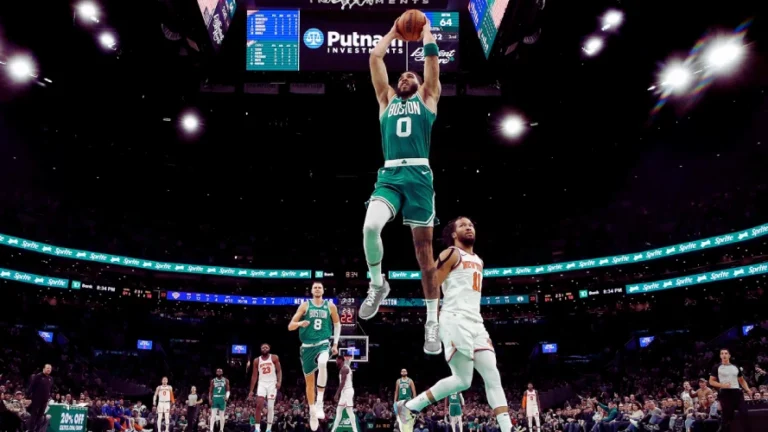
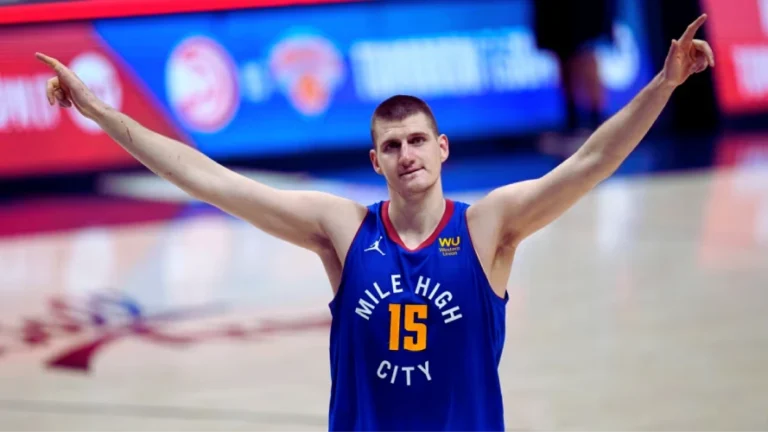
The Western Conference arms race and the continued dominance of teams like Boston and Denver mean that marginal improvements will not be sufficient for championship contention. Orlando needs Banchero to reach his ceiling while the supporting cast continues developing and contributing at high levels.
His return should catalyze this process by putting every player back into their optimal roles and creating the kind of balanced attack that can trouble elite defenses in playoff basketball.
The Timing Factor
The timing of Banchero’s return could not be better for a Magic team that has gained momentum and confidence during his absence. Rather than returning to a struggling squad that needs rescuing, he joins a group that has proven its mettle and established its identity.
This dynamic should make the reintegration process smoother and more natural. Players have grown into expanded roles and gained confidence in their abilities, which should make them better complementary pieces when Banchero returns to his primary role.
The upcoming schedule provides opportunities to work through any initial adjustment period while maintaining the playoff positioning the team has earned through its strong play during his absence.
Conclusion
Paolo Banchero’s impending return to the Orlando Magic lineup represents far more than simply getting another talented player back on the court. While the team’s impressive 7-3 record in his absence has generated questions about his necessity, the underlying numbers tell a compelling story about why his comeback will solve the franchise’s most pressing structural problem.
The starting lineup statistics paint a clear picture of dominance when Banchero is healthy and integrated. A plus-19.3 net rating with him compared to minus-10.1 without him in the starting unit represents the difference between championship-level basketball and mediocrity. These are not marginal improvements but fundamental shifts that separate contenders from pretenders.
The emergence of Anthony Black as a legitimate sixth man and the overall improvement of the bench unit during Banchero’s absence should be celebrated as validation of the roster’s depth and development. However, these improvements become exponentially more valuable when combined with elite starting lineup play rather than used to compensate for its absence.
The national media narrative questioning whether Orlando is better without its young star misses the forest for the trees. Championship teams require both exceptional individual talent and the depth to support that talent throughout long seasons and playoff runs. The Magic have now demonstrated they possess both elements.
Banchero’s evolution as a player was already evident in his final healthy games, where he showed improved balance between individual scoring and team facilitation. His return should accelerate this development while putting every other player back into their optimal roles within the team’s structure.
The real test will not be whether the Magic can maintain their recent success with Banchero back in the lineup. The question is whether they can reach the championship ceiling that has eluded the franchise since the Dwight Howard era. With their young star returning to join a proven supporting cast that has gained confidence and experience, that ceiling appears higher than it has been in years.
As the Undertaker’s theme music may once again echo through the Kia Center, Paolo Banchero’s return represents not just the comeback of an individual player, but the restoration of a championship-caliber starting lineup that can finally unlock this team’s full potential.