
LOS ANGELES — The Los Angeles Lakers preserved an unblemished NBA Cup slate and secured a home quarterfinal by defeating the Dallas Mavericks 129 to 119 on Friday, November 28, 2025. The game became a showcase for the Lakers’ transformed backcourt, where Austin Reaves and Luka Dončić combined to carry the club while Anthony Davis made a much anticipated return to Los Angeles after missing time with a calf injury.
Reaves set the tone from the opening minutes with a clinic in efficiency and timing. He finished with a game high 38 points on a sparkling 12 of 15 shooting and knocked down six three point attempts. His aggression on the perimeter and smart decision making in transition forced Dallas to continually adjust rotation patterns. Reaves also chipped in eight rebounds and moved the offense without hesitation, delivering a performance that read like a veteran’s night even as he kept defenders off balance with quick footwork and confident stroke.
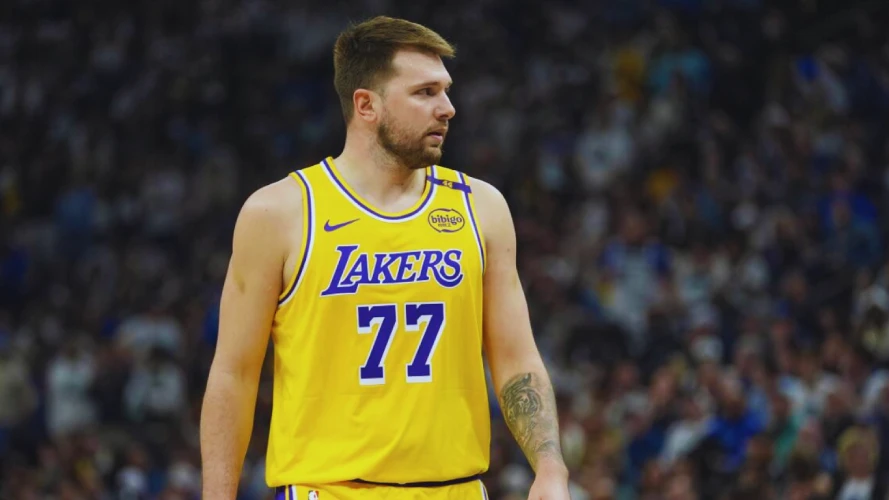
Dončić complemented that effort with his customary mixture of scoring and playmaking. In what marked his third matchup against the club that traded him less than a year ago, Dončić authored a 35 point, 11 assist double double while hauling in five rebounds across 40 minutes. He attacked closeouts, created for teammates in the pick and roll and remained composed late in the fourth quarter when Dallas looked poised to steal momentum. Together Dončić and Reaves scored 73 points, a tandem output that set the pace for the Lakers and made Los Angeles difficult to contain for long stretches.
LeBron James provided a steadying presence in the lineup. He poured in 13 points and handed out seven assists while collecting five rebounds. His late game three shaped the final sequence and helped blunt a Mavericks comeback attempt. James spent much of the night orchestrating touches and anchoring the defense in clutch minutes, a contribution that often goes unnoticed in box score snapshots yet proved vital to preserving the lead in the contest’s closing phases.
Deandre Ayton did his part on the interior with 18 points and eight rebounds, offering the kind of physicality and finishing that balanced Los Angeles’ perimeter success. His ability to seal defenders, secure offensive boards and convert at the rim relieved pressure from the guards and produced easy points that kept the margin from shrinking when the Mavericks pushed a physical approach.
Anthony Davis received an enthusiastic reception when he stepped onto the floor in his first game back after a 14 game absence due to a strained calf. On a minutes limit he delivered 12 points, five rebounds, five assists and three blocks. The crowd’s response highlighted the respect he earned during five and a half seasons in Los Angeles and the emotional undertow surrounding his return. He showed flashes of his defensive instincts and post skill set while remaining under a managed workload designed to ensure a long term return to form.
For the Mavericks the contest offered mixed takeaways. P.J. Washington led the way with 22 points and nine boards, converting with a variety of midrange moves and timely offensive rebounds. Rookie Cooper Flagg put together a promising stat line of 13 points, 11 assists and seven rebounds, showcasing his potential as a playmaking forward capable of initiating offense within flow sets. Ryan Nembhard made his first career start and responded with 17 points, displaying poise and scoring instincts that suggest he can be a reliable rotation option moving forward.
Even so Dallas could not sustain the level of execution necessary to hold off a surging Lakers squad. The Mavericks held a slim lead with less than eight minutes to play but could not withstand a decisive Los Angeles push. Defensive lapses on the perimeter and an inability to consistently contest shots at the rim allowed the Lakers to generate separation during the critical stretch. The defeat deepened a troubling trend for Dallas, marking their fifth loss in six games and reinforcing the reality that they had already been eliminated from NBA Cup contention earlier in the week.
The game shifted in the second half when Los Angeles mounted an emphatic sequence that swung momentum widely in their favor. A dominant run of 13 to 1 created cushion and forced Dallas into hurried possessions that led to inefficient shot selection. That passage underscored the Lakers’ ability to clamp down on defense while maintaining offensive balance. Reaves rimmed in three pointers, Dončić threaded passes to cutters and Ayton cleaned up the glass, a combination that proved too much for the Mavericks to overcome in the remaining minutes.
Statistically the game split into clear narratives. The Lakers found gravity in the arc and in late clock execution while the Mavericks produced spurts of creativity but struggled to finish sequences. Turnovers at inopportune moments and missed opportunities on the offensive glass tilted the contest toward Los Angeles. The Lakers’ bench contributed with key minutes that preserved leads and allowed starters to rest without a collapse, which in a compressed Cup schedule is a significant strategic advantage.
For Los Angeles the victory serves multiple purposes. It extends a winning streak and cements the club’s spot as a force in the Cup while giving the roster a blueprint for how to win with a collective approach. The tandem of Reaves and Dončić has become an engine of productivity that pairs a hot shooting streak with elite creation. LeBron’s steady hand and Ayton’s interior presence round out a group that now looks deep and capable of handling pressure moments.
For Dallas the loss offers a chance to regroup and reassess. The young pieces flashed potential yet the veteran elements failed to supply consistent stops when it mattered. Improvements in late game defense and more reliable perimeter containment will be necessary if the Mavericks hope to halt their recent slide.
As the Cup moves into the quarterfinals the Lakers will enjoy home court for the next round while the Mavericks return to a period of reflection. The outcome on Friday nonetheless served as a reminder of basketball’s old adage that great performances often come from unexpected pairings and that a team’s depth will decide who advances when both talent and timing collide.