
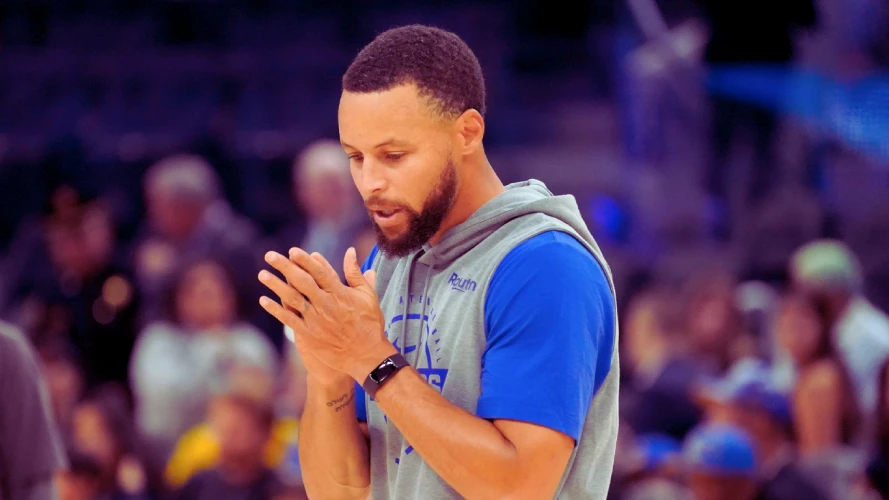
The Golden State Warriors’ painful loss to the Houston Rockets on November 26 carried an unwelcome subplot when Stephen Curry limped off the court late in the fourth quarter, clutching his right thigh. What began as a hard-fought game took on an anxious edge for Warriors fans and the league when Curry, the team’s heartbeat and offensive engine, suffered a right quad contusion after collisions with Alperen Şengün and Amen Thompson. With an MRI scheduled to determine the full scope of the injury, the organization, its supporters and basketball watchers everywhere are holding their breath for good news.
The moment that sent a chill through Chase Center Basketball is inherently physical, but some collisions feel different — sharper, more consequential. Late in the fourth quarter, Curry went to the floor following contact that involved Rockets big man Alperen Şengün and the fleet Amen Thompson. He rose, tried to walk it off and continued for a short stretch, but by the final minute he was clearly favoring his right leg. When he left the game with 35 seconds remaining, the sight of Curry limping and wincing on the bench sent an immediate ripple through the arena and across social feeds. The image of a player who has carried so many late-game burdens suddenly compromised underscored how fragile momentum and championship hopes can be.
Initial diagnosis and what a quad contusion means Team doctors and trainers labeled the injury a right quad contusion — essentially a significant bruise to the quadriceps. While not as ominous as a torn ligament or a bone injury, a contusion can still be painfully limiting. The quadriceps drive so much of a basketball player’s ability to sprint, cut, leap and absorb contact. A severe bruise can cause swelling, tenderness and reduced range of motion, all of which can hamper shooting mechanics and defensive mobility. That context helps explain why both the team and fans are cautious; even minor-sounding muscle injuries can translate into missed games or diminished performance until fully healed.
Coach Kerr’s measured optimism and the team’s response After the game Warriors coach Steve Kerr struck a cautiously optimistic tone. Kerr expressed relief that the issue appears to be a quad contusion rather than a more serious ankle or knee injury, both of which can carry longer recovery timelines and higher risk. His comments reflected the pragmatic hope of a coach who knows how quickly soft-tissue issues can resolve but also how they can linger if not managed properly. Warriors trainers moved quickly to immobilize and assess the area, and the team announced that Curry will undergo an MRI to more accurately determine the severity and guide treatment. Until the scan results arrive, the organization is wisely tempering expectations and prioritizing accurate diagnosis over speculation.
Why the MRI matters and what it could reveal An MRI will provide a detailed look at the soft tissues in Curry’s thigh and will confirm whether the injury is a straightforward contusion or whether there is deeper muscle strain, intramuscular hematoma or another complication. If the MRI shows only a contusion without significant bleeding into the muscle or structural damage, the prognosis is generally favorable with rest, anti-inflammatory measures and a graduated return-to-play plan. If the scan reveals a more serious strain or a related injury, the timeline could extend. For a veteran like Curry whose rhythm is finely tuned, even a short layoff can ripple through team chemistry, shot timing and late-game sequencing.
Implications for the Warriors’ short-term outlook Stephen Curry is more than a star player; he is the catalyst for Golden State’s spacing, shot creation and late-game orchestration. His absence, even brief, forces tactical adjustments. Defenses that usually respect Curry’s gravity can collapse differently when he is out, opening lanes for teammates but also changing shot profiles. The Warriors’ coaching staff will need to weigh who picks up primary ball-handling duties, how to preserve spacing and how to maintain defensive intensity. Players who have been waiting for expanded roles may see an opportunity, but the team will also face the test of replicating Curry’s unique offensive influence in high-leverage moments.
How teams and fans navigate uncertainty In the hours and days after an in-game injury, the information vacuum often breeds anxiety. That’s why Coach Kerr and the Warriors’ medical team are being methodical: identify the injury, scan for a definitive diagnosis and then outline treatment. For fans, the waiting period is a test of patience. Social media will inevitably churn with takes, timelines and worst-case scenarios, but the prudent approach is to trust medical updates and avoid premature prognoses. The MRI results, and the subsequent timeline the team releases, will offer clarity for ticket-buyers, fantasy managers and playoff prognosticators alike.
Stephen Curry’s history and resilience factor Stephen Curry’s career has included both the highs of MVP seasons and the challenges of soft-tissue injuries. His conditioning, recovery routines and professional discipline give reason for guarded optimism. He has demonstrated the ability to come back from knocks and maintain elite performance levels, and the Warriors’ medical staff is among the league’s best at managing load and rehabilitation. Still, the unique nature of each injury and the timing within a long NBA season mean that even familiar recovery strategies must be tailored to the current situation.
What to watch for next The most immediate signpost will be the MRI report. That imaging result will shape an initial recovery plan and establish whether Curry’s absence, if any, will be measured in days or weeks. Subsequent updates will include swelling reduction, range-of-motion testing and on-court progression drills. Fans should also watch how the Warriors manage practice minutes and rotations in Curry’s absence to protect his long-term health and preserve team performance. Until then, updates from the team’s official channels will be the most reliable source of information.
A physical, competitive game unfolded against the Rockets, and amid the loss the Warriors and their fans faced a new worry: Stephen Curry walking off with a right quad contusion. The immediate relief is that the injury does not appear to be structural to an ankle or knee, but the MRI will be the deciding moment for clarity on his condition. For now the organization must balance urgency with caution, leaning on medical expertise and a methodical path to recovery. The NBA season is a marathon not a sprint, and the hope for Curry, Golden State and their supporters is that this scare becomes a brief chapter rather than a defining setback. As the team and league await the MRI results, everyone connected to the Warriors will be hoping for the swift and complete return of their leader.