
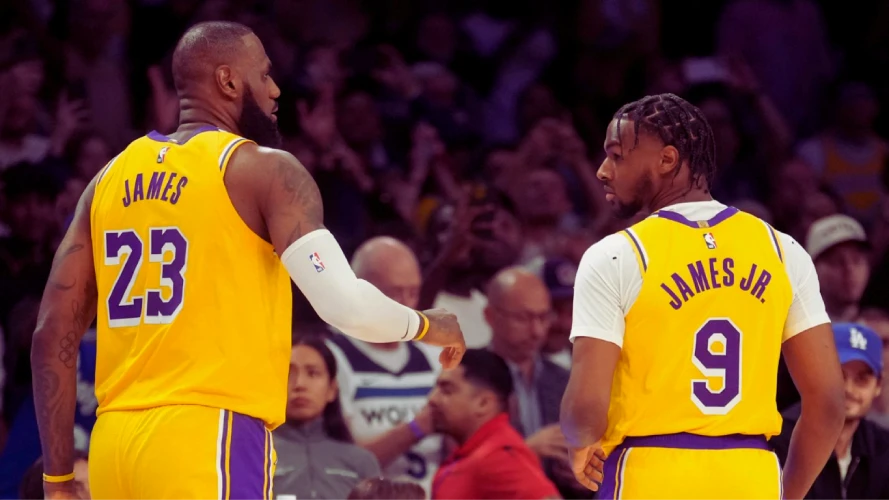
The night LeBron James and his son Bronny stepped onto the same NBA court felt like a storybook moment come to life. Fans held their breath as father and son shared a few rare minutes together in a Lakers uniform, and social feeds flooded with emotion, nostalgia, and instant analysis. But amid the heartfelt reactions, a wildly exaggerated stat line began to circulate: a claim that LeBron and Bronny combined for 130 points, 50 rebounds, and 70 assists. The numbers were impossible, yet they spread like wildfire. This was not only a reminder of the power of viral content but also a lesson in how easily misinformation can be dressed up and embraced when it fits a compelling narrative.
The Real Moment: Historic, Humble, and Genuine What actually happened was powerful without needing embellishment. On October 22, 2024, LeBron James and Bronny James became the first father-son duo to play in the same NBA game. The appearance was brief and meaningful. In a preseason matchup against the Minnesota Timberwolves, their combined output was modest: 19 points, 5 rebounds, and 4 assists. Those numbers are unremarkable on paper, but the context made them unforgettable. For LeBron, a future Hall of Famer, and Bronny, a young player taking his initial steps in the league, sharing the court was a milestone decades in the making.
That low-key stat line does not detract from the emotional significance. Watching a father and son trade passes, exchange smiles, and celebrate a shared dream is the kind of human moment that transcends box scores. The reality of their performance—real, human, and thoroughly achievable—was enough to capture imaginations and headlines.
Why the Fake Stat Caught Fire To understand why an absurd statistic gained widespread attention, we need to look at how social media rewards sensationalism. An outrageous claim is more likely to stop a user mid-scroll. Graphics with bold numbers, a clickbait caption, and a familiar name like LeBron can create an irresistible combination. Emotion amplifies engagement. The story of a father and son reaching the NBA together already tugs at heartstrings, and artificially pumping up the accomplishment turns admiration into awe.
Misinformation thrives on emotional resonance. When fans feel pride, nostalgia, or astonishment, they are less likely to pause and verify. The fabricated stat also functioned as engagement bait: people were inclined to share the image in celebration or spark debate, each reaction further spreading the falsehood. In a way, the fake line succeeded at what it aimed to do garner attention while sacrificing accuracy.
The Role of Confirmation Bias and Speed Confirmation bias played a crucial part in the spread of the fabricated numbers. Many fans already admire the James family and are predisposed to accept stories that elevate their achievements. If a claim reinforces a favored narrative, people are quicker to embrace and propagate it. Add to that the relentless pace of the news cycle and the tendency to react before verifying, and misinformation finds fertile ground.
Social platforms reward speed and emotionality more than careful sourcing. A flashy image with a jaw-dropping figure gets shared instantly, while a thorough box score or a trusted sports-site link takes longer to digest. By the time fact-checks arrive, the false narrative often feels like established reality.
How to Spot and Stop Sports Misinformation The LeBron-Bronny episode is a gentle example of viral misinformation, but the mechanics are the same for more harmful falsehoods. Media literacy is now a vital skill for anyone who consumes content online. Start by considering the source. Is the post from a verified sports outlet, a trusted journalist, or a meme account designed for clicks? If a claim seems too extraordinary, treat it skeptically. Cross-referencing with reliable sites such as the NBA’s official page, ESPN, or other reputable sports databases is quick and usually definitive.
Another practical approach is to check the timing and context. A spectacular stat line that appears without a box score, full-game recap, or corroboration from major sports journalists should raise red flags. Remember that genuine historic achievements get documented across multiple credible sources.
Why the Real Story Still Matters It may be tempting to mock the viral misstatements and move on, but the underlying truth here is worth savoring. The James duo gave basketball fans a rare shared experience that blended family, legacy, and the dream of making it to the highest level of the sport. These themes are central to why sports captivate us statistics aside. Moments like this are reminders of the human stories that anchor the NBA: fathers and sons, mentors and proteges, veterans welcoming new generations. Whether you follow Ivica Zubac’s hustle on the boards, marvel at LeBron’s longevity, or track a young player’s first steps like Bronny, the league is built on narratives as much as numbers.
Social media will always seek out the sensational, but heartfelt milestones do not need amplification through fiction to be meaningful. The true value of this event is not in an invented triple-digit headline; it is in the visual of a family dream realized and the inspiration that will ripple through young players and fans.
A Call for Better Habits If there is a practical takeaway for fans, it is this: celebrate the emotional highs, but hold fast to the facts. Enjoy the shared joy of seeing a father and son in the same uniform, share verified highlights, and push back gently when you see questionable claims. In doing so, the community around the sport becomes stronger and more honest, and the real stories those of perseverance, family, and achievement get the attention they deserve.
The viral claim that LeBron and Bronny combined for 130 points, 50 rebounds, and 70 assists was fiction, but it also highlighted a deeper truth about how we consume sports media today. Sensationalism travels fast, while nuance and accuracy often lag behind. The genuine accomplishment of LeBron and Bronny playing together is meaningful and inspiring without inflated numbers. That real moment—modest in statistics, monumental in emotion reminds us why we watch the NBA: not just for box scores but for the human stories that make basketball more than a game.