

Introduction
Rumors move fast in sports. A single interview clip or a casual line can ignite social media, fan speculation, and headline writers hunting for meaning. That’s exactly what happened when Orlando Magic forward Wendell Carter Jr. was asked about recent whispers linking him romantically to Chicago Sky star Angel Reese. Carter didn’t hand reporters a neat confirmation or denial. Instead he offered a coy, confident reply that has only intensified interest: “That’s the homie, for sure. We’re locked in … That’s my girl, though. We’re locked in, for sure.” In a few short words he managed to be both private and suggestive, prompting conversations not only about the personal lives of two high-profile athletes but also about how NBA and WNBA stars navigate love, media and public scrutiny.
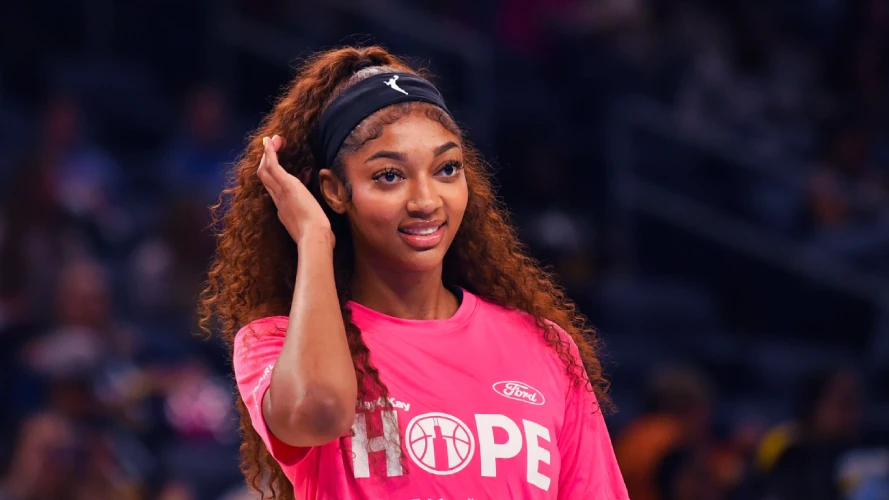
From Duke standout to NBA mainstay, Wendell Carter Jr. is comfortable under the lights. Angel Reese rose to national prominence after leading LSU to a national title and has translated that star power to the WNBA, earning All-Star honors early in her career. Together the names read like a headline compelling on and off the court. Yet the moment’s significance goes beyond gossip. It speaks to how fans engage with players’ lives and how relationships between elite athletes can shape both personal branding and fan narratives in the modern sports era.
A calculated response that fuels curiosity
When a reporter asked Carter to address the dating rumors during a FanDuel TV appearance, his answer struck a deliberate middle ground. He didn’t say “yes” in black and white, but he didn’t say “no” either. Instead he placed emphasis on trust and timing. “Y’all are going to find out when y’all need to find out,” Carter said, anchoring the conversation around his own terms and protecting his private life while still acknowledging the connection.
That sort of calibrated reply accomplishes several things. It allows Carter to set boundaries without seeming evasive. It signals to fans there’s something real enough to merit comment. And it preserves space for Angel Reese and him to control the narrative when and if they choose. For athletes who have become public figures, this balance between transparency and privacy is crucial. They know the media cycle can transform a relationship into a spectacle overnight, so managing revelations on their own timeline becomes a form of self-preservation.
Why fans care: identity, representation and fandom
There’s more driving the fascination than simple celebrity curiosity. Fans gravitate toward stories that humanize athletes, and relationships do just that. They offer glimpses of life beyond statistics and highlight reels. For Angel Reese, who quickly became one of the WNBA’s brightest young stars, the narrative is particularly potent. Her college years at LSU made her a cultural figure, and her transition to the WNBA cemented her athletic credibility. Fans have followed her journey closely, so a rumored relationship with an established NBA player deepens that emotional investment.
Representation also matters. When high-profile athletes from the men’s and women’s leagues appear in a relationship, it can feel like a cultural moment, reflecting shifting perceptions of professional sports as an interconnected ecosystem rather than separate silos. Fans who admire both leagues relish the crossover: the idea of an NBA and a WNBA star forming a personal connection feels like a win for basketball’s broader popularity and visibility.
The competitive banter that keeps sports fun
Carter didn’t stop with the relationship hints. He was also asked how he would fare in a hypothetical 2-on-2 matchup involving himself and Reese against Miami Heat center Bam Adebayo and A’ja Wilson, a four-time WNBA MVP. Carter’s reply captured another facet of athlete culture confident, playful competitiveness. He acknowledged the talent of Bam and A’ja while still championing his own pairing.
“I’m a competitor. I ain’t going to say that they’re going to win, you know what I mean?” he said. “Shoutout to Bam and A’ja, though. A’ja’s one of the best to ever do it already. Bam is doing his thing. But I’m always going to ride with the home team, for sure.”
That kind of banter keeps fans engaged without escalating into unnecessary drama. It underscores the pulse of competition that defines both leagues while allowing athletes to showcase personality beyond their stat lines.
The broader context: careers, branding and life under the microscope
Both Carter and Reese have built notable careers on the foundation of talent and hard work. Carter, a former Duke standout now in his eighth NBA season, posts solid numbers for the Orlando Magic and has earned respect within the league for his steady presence. Reese’s ascent has been swift and dramatic; she became a household name after her college national title run and has carried that momentum into a promising professional career with the Chicago Sky.
Personal relationships between athletes can have ripple effects on branding and public perception. High-profile couples attract endorsements, media appearances and fan attention that extends beyond wins and losses. That can be an advantage, particularly for players looking to amplify their voices and marketability. But with visibility comes scrutiny. Social media can magnify private moments, and narratives can be shaped by rumor or misinterpretation. That environment places an added premium on how athletes choose to communicate about their personal lives.
What’s next and why privacy still matters
For now there’s no official confirmation from either Carter or Reese beyond Carter’s teasing remarks. The story’s future depends on choices the two make — whether to share aspects of their life publicly or to keep their relationship largely private. Either route is valid. Athletes are entitled to personal lives that aren’t constantly subject to public dissection.
If the relationship does become public, it will likely be celebrated by many fans and analyzed by commentators. If it remains private, the rumors will gradually cool as seasons, games and new headlines take over attention. What’s important is that the players retain agency over how they present themselves and manage the attention that comes with fame.
Conclusion
The moment Wendell Carter Jr. hinted that he and Angel Reese are “locked in” is more than a tabloid flash. It’s a snapshot of modern athlete life, where personal relationships intersect with branding, fandom and media cycles. Carter’s measured response balanced acknowledgment with privacy, letting curiosity simmer while protecting his personal life. Fans will understandably be invested, drawn by the human story behind two compelling basketball careers. Whether they confirm their relationship or choose to keep it private, the episode highlights how athletes navigate a world where every comment can spark headlines. In the meantime fans can enjoy the speculation, appreciate the competitive banter, and most importantly, continue to celebrate both Carter’s and Reese’s growing legacies on the court.